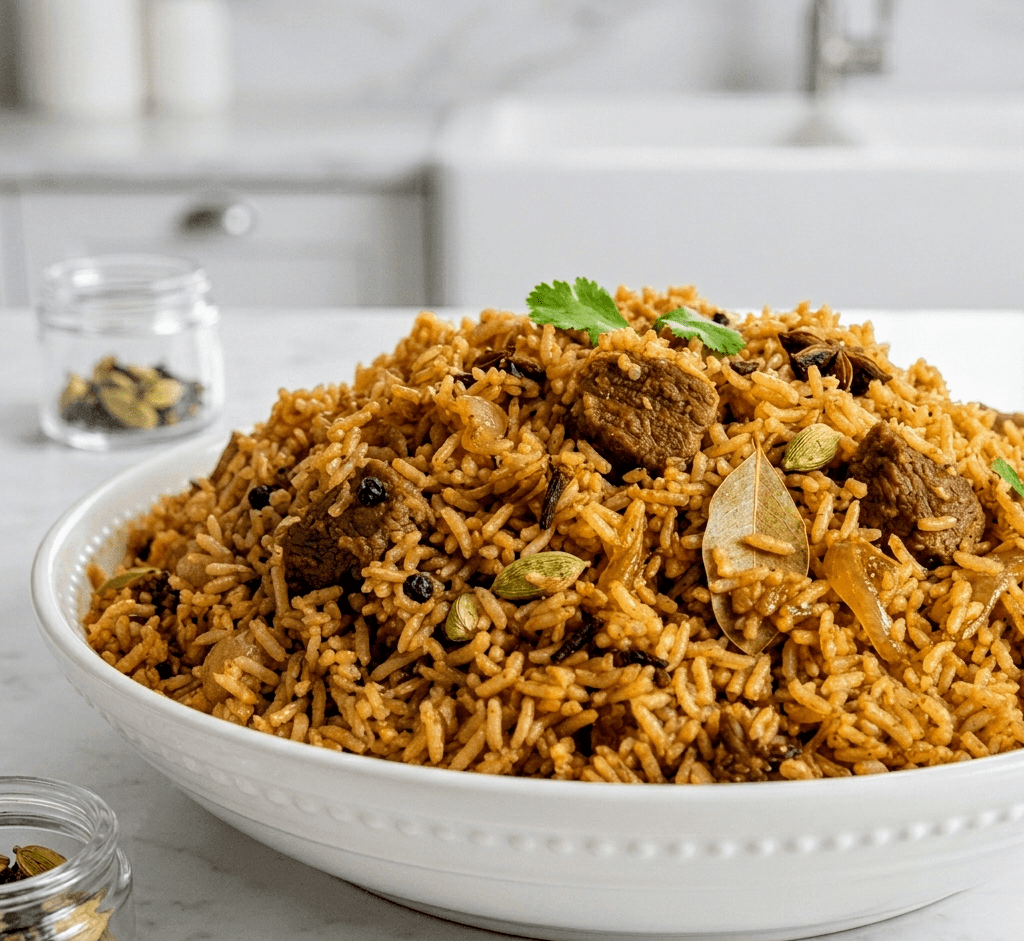
If there is one dish that defines celebration and community in East Africa, it is pilau. Originating from the Swahili coast, Kenyan pilau rice has established itself as the undisputed king of celebratory meals. Whether it is a wedding, Eid, Christmas, or a Sunday family gathering, a pot of perfectly spiced, golden-brown pilau is always the centrepiece of the table.
What makes Kenyan pilau so unique is the combination of deeply caramelised onions, tender beef, and a blend of warm whole spices that have defined Swahili coast cooking for centuries. No soy sauce, no artificial colouring, just good technique and the right spices.
The Secret to Authentic Kenyan Pilau Rice
Two things separate a truly great Kenyan pilau from ordinary spiced rice.
The onion caramelisation is where the colour comes from. The deep brown that pilau is known for is not from soy sauce or food colouring. It comes from patiently browning a generous amount of red onions until they are deeply caramelised, just on the edge of crispness. This step cannot be rushed.
The homemade beef stock is the other game changer. The beef is boiled together with whole spices, cardamom, cloves, cumin, cinnamon, and black pepper, and the liquid left behind is used to cook the rice. Every grain absorbs that flavour from the inside out.
Ingredients
For the meat and stock:
– 500g beef, cut into bite-sized pieces
– 3 cloves of garlic, crushed or minced
– 1 teaspoon cumin seeds
– 1 cinnamon stick
– 4 to 5 whole cardamoms, gently cracked
– 4 to 5 whole cloves
– Half a teaspoon of black peppercorns
– Salt to taste
– 3 to 4 cups of water
For the rice:
– 1 cup long-grain Basmati rice
– 2 large red onions, finely chopped
– 1 tablespoon pilau masala powder
– 3 to 4 tablespoons of cooking oil
– 2 to 2½ cups of reserved beef stock
How to Cook Kenyan Pilau Rice
Step 1: Cook the beef and build the stock
The beef is placed in a pressure cooker with the garlic, whole spices, salt, and water, then cooked for about 30 minutes until completely tender. On a regular stovetop, the same result is achieved by simmering in a covered pot for about an hour. Once done, the stock is strained and set aside separately from the meat. That stock is the base for cooking the rice and should not be discarded.
Step 2: Caramelise the onions
Oil is heated in a deep pot and the finely chopped red onions are added. They are cooked on medium heat, stirring regularly, until they reach a deep golden-brown colour. This is what gives Kenyan pilau rice its signature colour and rich base flavour.
Step 3: Add the beef and bloom the spices
The cooked beef is added to the caramelised onions and seared together for 2 to 3 minutes. The pilau masala is then stirred in and fried in the oil for about a minute. This releases the essential oils from the spices and deepens the overall flavour significantly.
Step 4: Toast the rice
The Basmati rice is added dry into the pot and stirred with the meat and spices for 2 minutes before any liquid is added. This coats each grain in the spiced oil and is what gives the final dish its individually separated grains rather than a sticky, clumped texture.
Step 5: Simmer to finish
The reserved beef stock is poured in, 2 to 2½ cups depending on whether the rice was pre-soaked. The broth should taste well-seasoned at this point. The pot is brought to a boil, then the heat is reduced to the lowest setting, the lid is placed on tightly, and the rice is left to steam for 15 to 20 minutes without stirring. Once all the liquid is absorbed, the heat is turned off and the pot is left to rest for 5 minutes before fluffing with a fork.
How to Serve Kenyan Pilau Rice
Kenyan pilau rice is traditionally served with kachumbari, a fresh salad of sliced tomatoes, raw red onion, coriander, and lemon juice.


