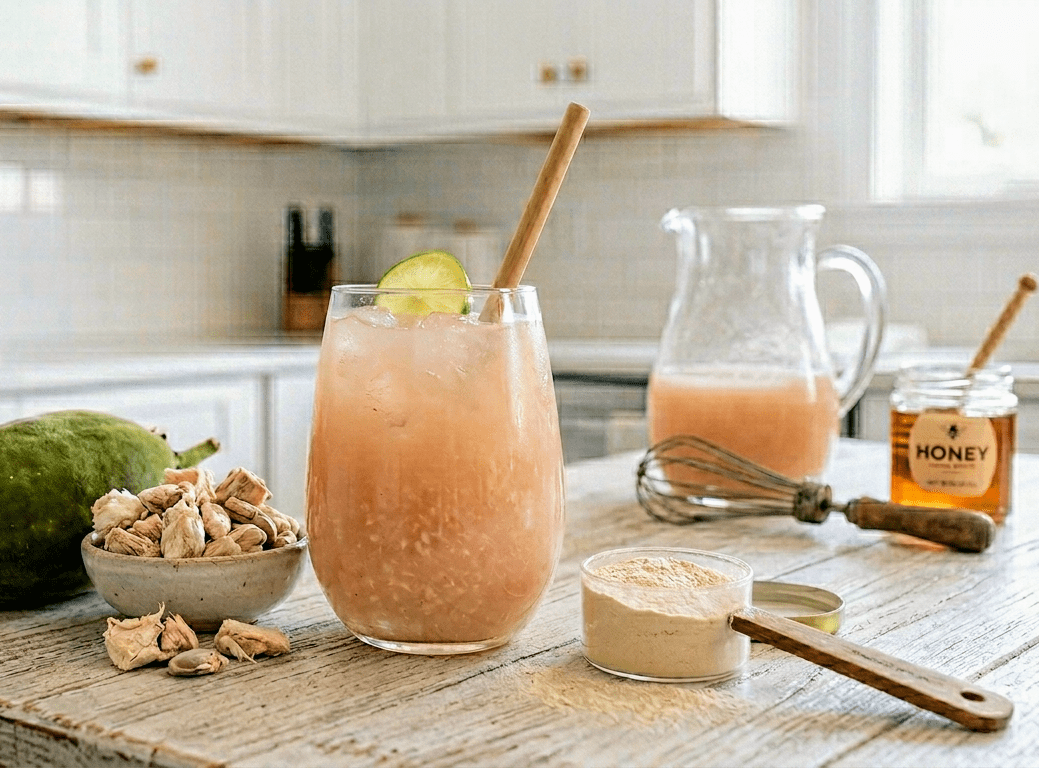
There is a reason the baobab tree has been called the “Tree of Life” for thousands of years across Africa. From its ancient bark to its nutrient-packed fruit, every part of this magnificent tree has sustained communities across the continent since before recorded history. And nothing captures its essence more beautifully than a tall, cold glass of Mabuyu juice (In Zambian Language) — the creamy, tangy, cooling drink made from baobab fruit pulp that has quenched thirst and nourished bodies in East and West Africa for generations.
This recipe will show you exactly how to make authentic African baobab juice at home ,whether you have access to fresh baobab fruit or the widely available baobab powder. The result is a silky, naturally tart drink with a subtle citrus-like flavour that is unlike anything else in the world.
What Is Mabuyu Juice (Baobab Drink)?
Mabuyu is the Zambian name for the baobab fruit (Adansonia digitata), and “Mabuyu juice” or “Mabuyu drink” refers to the refreshing beverage made from the powdery white pulp found inside the baobab pod. When the hard, coconut-like shell of the baobab is cracked open, the dry pulp inside naturally dissolves in water, producing a milky, tangy juice that is naturally rich in Vitamin C, calcium, and antioxidants.
While the name changes across borders, the soul of the drink remains the same: a gift from Africa’s most iconic tree, mixed simply with water and a touch of sweetness.
Why You Will Love This Recipe
- Incredibly nutritious — one of nature’s highest natural sources of Vitamin C
- Unique flavour — naturally tangy and citrusy with a smooth, velvety texture
- Naturally caffeine-free and suitable for the whole family
- Made in minutes — no cooking required if using baobab powder
- Deeply rooted in African heritage — connect with thousands of years of tradition
- Customizable — add ginger, lime, condensed milk, or honey to make it your own
Ingredients for African Baobab Mabuyu Juice
(Makes approximately 1.5 litres / 6–8 glasses)
The Essential Ingredients
- 4–5 heaped tablespoons baobab powder (or 1 cup fresh baobab pulp, seeds removed)
- 1.5 litres cold filtered water (or mix of water and milk for a creamier version)
- Sweetener to taste — honey, sugar, agave syrup, blended dates, or condensed milk
For Serving
- Ice cubes
- Fresh mint leaves or a slice of lime for garnish
Equipment You Will Need
- Large mixing bowl or jug
- Fine mesh strainer, muslin cloth, or cheesecloth
- Wooden spoon or balloon whisk
- Airtight glass bottles or covered jug for storage
Step-by-Step: How to Make Mabuyu Baobab Juice
Step 1 — Prepare Your Baobab
If using baobab powder: Measure out 4–5 heaped tablespoons into a large bowl or jug. No further preparation needed.
If using a whole fresh baobab fruit: Crack the hard outer shell by tapping it firmly against a hard surface or using a mallet. Break it open and scoop out the dry white pulp. Remove as many seeds as possible by hand. Some seeds will remain and will be strained out later.
Step 2 — Mix with Water
Pour the cold filtered water over the baobab powder or pulp. Using a whisk or wooden spoon, stir vigorously for 2–3 minutes to dissolve the powder and break up any lumps. The water will turn a milky cream or pale yellow colour , this is exactly what you want.
Step 3 — Allow to Infuse
Cover the bowl or jug and allow the mixture to sit for 1–2 hours at room temperature, or place it in the refrigerator overnight. This resting period allows the flavour to develop fully and the baobab to dissolve completely into the water, creating a smooth, even consistency.
Step 4 — Strain the Juice
Pour the mixture through a fine mesh strainer or layer of muslin cloth set over another large jug or bowl. Press gently with the back of a spoon to extract all the liquid. Discard the fibrous solids (or add them to a smoothie — they still have nutrients!). The strained juice should be a smooth, creamy, pale drink.
Step 5 — Season and Sweeten
Now personalize your Mabuyu juice. Add your sweetener of choice a little at a time — honey, sugar, agave, or condensed milk — and stir until fully dissolved. Taste as you go. Add a squeeze of fresh lime or lemon juice for brightness, a tiny pinch of sea salt to round the flavours, and any spices (nutmeg, cinnamon, ginger juice) you enjoy.
Step 6 — Chill and Serve
Transfer your finished Mabuyu juice into clean glass bottles or a covered jug and refrigerate for at least 1 hour before serving — baobab juice is at its absolute best ice cold. Pour over ice in tall glasses and garnish with fresh mint or a lime wedge. Serve alongside fried snacks, fresh fruit, or simply on its own on a warm afternoon.
Tips for the Best Baobab Juice
Start with cold water. Baobab powder dissolves more smoothly in cold or room-temperature water. Hot water is not needed and can dull the natural flavour.
Strain twice for a silkier result. Passing the juice through a fine strainer and then through muslin cloth produces a beautifully smooth, restaurant-quality texture.
Add lime juice after sweetening. Lime juice is best added last so you can balance the acidity and sweetness together, tasting as you adjust.
Use condensed milk for a West African Bouye style. Baobab juice is often enriched with sweetened condensed milk, vanilla extract, and a pinch of nutmeg ,creating a dessert-like drink that is deeply indulgent.
Quality of baobab powder matters. Use organic, food-grade baobab powder from a reputable supplier. Fresh powder has a brighter, more vivid flavour. Stale powder can taste flat.
Do not use warm water for storage. Always refrigerate your finished juice. Baobab juice ferments if left at room temperature for extended periods.
How to Store Baobab Mabuyu Juice
| Storage Method | Shelf Life |
|---|---|
| Refrigerator (airtight glass bottle) | 3–5 days |
| Freezer (in portions) | Up to 3 months |
| Room temperature | Same day only (ferments quickly) |
Always use clean glass bottles for storage. The natural acidity of baobab acts as a mild preservative, but refrigeration is essential for anything kept beyond a few hours.


