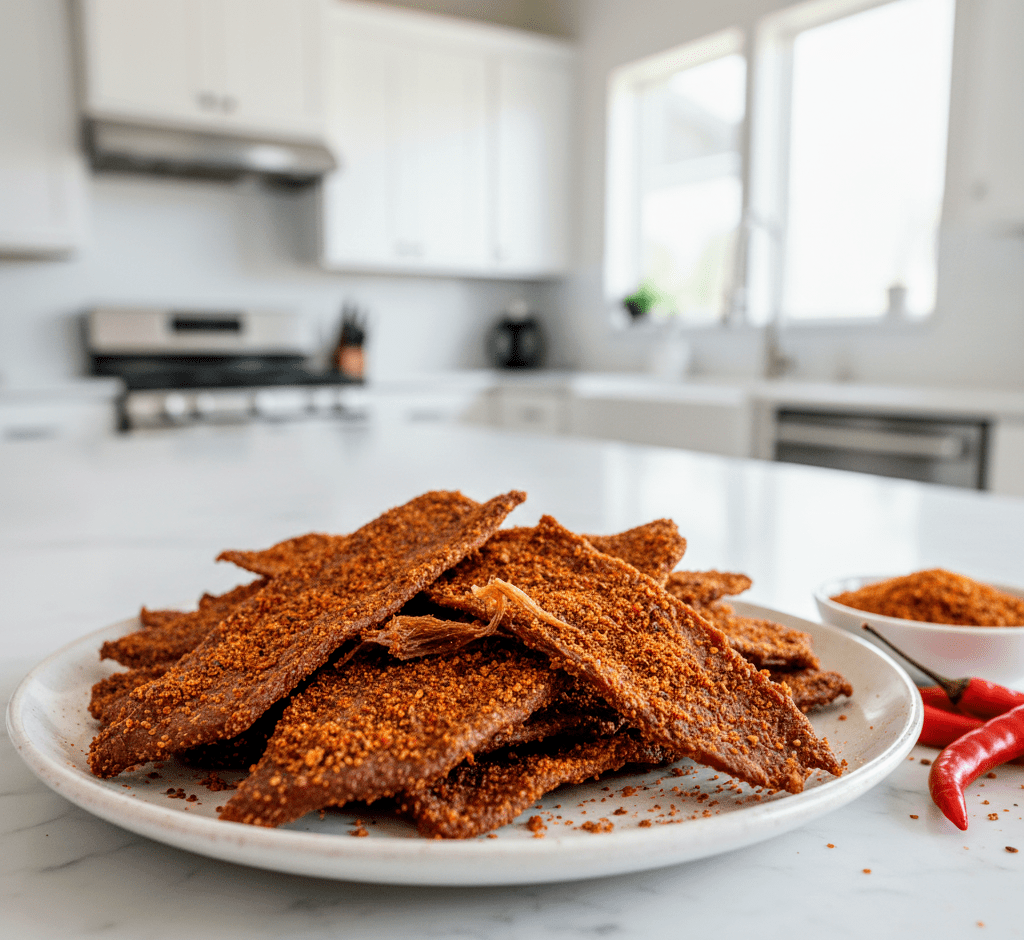
If you love bold flavors and high-protein snacks, kilishi is something you absolutely need to try. Often described as Nigeria’s version of spiced dried meat, kilishi takes things a step further than typical jerky with its rich peanut coating, fiery spices, and deeply savory taste.
This traditional West African delicacy is crispy, smoky, and intensely flavorful—perfect for snacking, sharing, or even selling as part of a food business.
What is Kilishi?
Kilishi is a Nigerian dried meat snack made from thinly sliced beef that is marinated, coated in a spicy peanut paste, and then dried and roasted.
It’s especially popular in Northern Nigeria and is known for:
- Its bold, spicy flavor
- A slightly crunchy, coated exterior
- A rich, nutty undertone from ground peanuts
- Long shelf life
Kilishi vs Biltong: What’s the Difference?
While both are dried meats, kilishi and biltong are very different:
- Kilishi is thin, coated in peanut spice paste, and roasted
- Biltong is thicker, air-dried, and not coated
- Kilishi has a spicy, nutty flavor, while biltong is more salty and tangy
Why You’ll Love This Kilishi Recipe
- Packed with protein – Great for energy and snacking
- Bold, unforgettable flavor – Spicy, smoky, and nutty
- Culturally rich – A taste of authentic West African cuisine
- Great for business – Popular and sellable snack
Ingredients for Authentic Kilishi
For the Meat:
- 1 kg lean beef (thinly sliced)
For the Peanut Spice Paste (Yaji Mix):
- 1 cup ground peanuts (peanut powder)
- 1–2 teaspoons cayenne pepper (adjust to taste)
- 1 teaspoon ground ginger
- 1 teaspoon garlic powder
- 1 stock cube (crushed)
- Salt to taste
Liquid Mixture:
- ½ cup water
- Optional: a little oil for richness
Step-by-Step Instructions
1. Slice the Meat Thinly
Cut the beef into very thin sheets (almost paper-thin). This is key to achieving the authentic kilishi texture.
2. First Drying Stage
Lay the meat slices flat on a rack or tray and sun-dry (or air-dry) for several hours until they lose most of their moisture but are still flexible.
3. Prepare the Peanut Paste
In a bowl, mix ground peanuts with spices, salt, and crushed stock cube. Add water gradually to form a thick, spreadable paste.
4. Coat the Meat
Dip or brush each piece of dried meat with the peanut spice mixture, ensuring it’s well coated on both sides.
5. Second Drying Stage
Return the coated meat to the drying rack and let it dry again until firm.
6. Roast or Grill
Lightly roast or grill the kilishi over low heat for a few minutes. This enhances the flavor and gives it a slightly smoky finish.
7. Cool and Serve
Allow to cool before eating. The texture will become slightly crisp as it rests.
Flavor and Texture: What to Expect
Kilishi is bold and unforgettable:
- Spicy and slightly smoky
- Nutty and rich from peanuts
- Crispy on the outside, slightly chewy inside
- Deeply savory and satisfying
Tips for Perfect Kilishi
- Slice meat as thin as possible for authentic texture
- Use lean cuts to prevent spoilage
- Control the spice level to suit your taste
- Dry thoroughly to extend shelf life
Variations You Can Try
Mild Kilishi
Reduce the cayenne pepper for a less spicy version.
Extra Spicy Version
Add chili flakes or more cayenne for heat lovers.
Oven Method
Use a low-temperature oven if sun drying isn’t possible.
How to Store Kilishi
- Store in an airtight container once fully dried
- Keep in a cool, dry place
- Can last several weeks if properly dried
Serving Ideas
- Enjoy as a snack on its own
- Serve with drinks at gatherings
- Add to salads for a protein boost
- Package and sell as a homemade product
Kilishi is more than just a snack, it’s a bold expression of flavor and tradition. With its spicy, nutty coating and satisfying texture, it’s a standout among dried meat recipes.
Making it at home allows you to customize the spice level and quality, giving you a truly authentic and rewarding experience.
Try it once, and you’ll understand why it’s so loved across West Africa and beyond.


