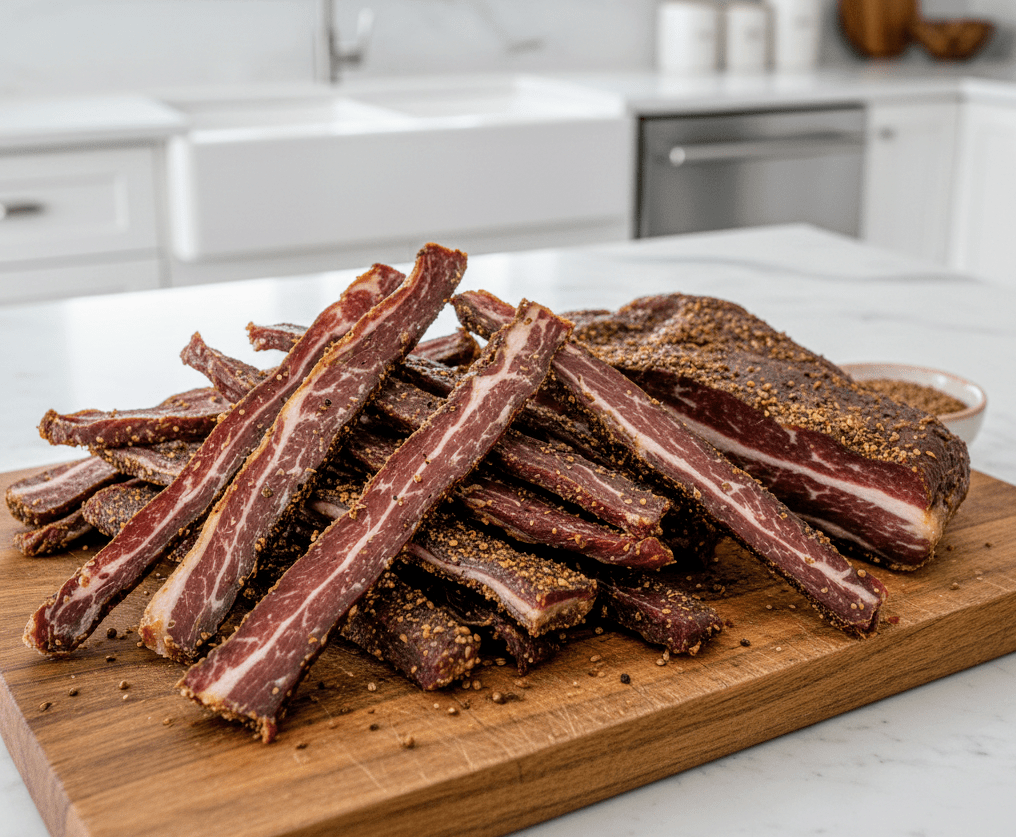
If you’ve ever tasted authentic South African biltong, you know it’s in a league of its own. Rich, savory, slightly tangy, and deeply satisfying, biltong is more than just dried meat—it’s a cultural staple and a beloved snack across Southern Africa.
In this guide, you’ll learn what makes biltong unique, how it differs from jerky, and how to make your own at home with simple ingredients.
What is Biltong?
Biltong is a form of air-dried, cured meat that originated in Southern Africa, particularly South Africa. Traditionally made using beef or game meat, it is seasoned with vinegar, salt, and spices, then slowly air-dried over several days.
Unlike jerky, which is often cooked or dehydrated quickly, biltong is cured and dried naturally, resulting in a more tender texture and deeper flavor.
Biltong vs Jerky: What’s the Difference?
While both are dried meat snacks, there are key differences:
- Drying method: Biltong is air-dried; jerky is usually heat-dried
- Texture: Biltong is softer and thicker; jerky is firmer and chewier
- Flavor: Biltong uses vinegar and spices; jerky often uses sweet marinades
- Cut of meat: Biltong is often cut thicker and along the grain
Why You’ll Love Biltong
- High in protein – Perfect for snacking or post-workout
- Low in sugar – A healthier alternative to many snacks
- Long shelf life – Great for storage and travel
- Rich, bold flavor – Deeply satisfying and savory
Ingredients for Traditional Biltong
- 1 kg beef (such as silverside or topside)
- 2 tablespoons coarse salt
- 2 tablespoons brown vinegar (or apple cider vinegar)
- 1 tablespoon whole coriander seeds (toasted and crushed)
- 1 teaspoon black pepper
- 1 teaspoon sugar (optional)
Step-by-Step Instructions
1. Prepare the Meat
Trim excess fat from the beef and cut it into long strips, about 2–3 cm thick. Cutting along the grain gives the traditional texture.
2. Season the Meat
Sprinkle salt evenly over the meat, then drizzle with vinegar. Rub the spices (crushed coriander, black pepper, and sugar) into the meat thoroughly.
3. Cure the Meat
Place the seasoned meat in a container and refrigerate for 12–24 hours. This allows the flavors to penetrate and the curing process to begin.
4. Air-Dry the Biltong
Remove the meat from the fridge, pat it dry, and hang the strips in a well-ventilated, dry space.
Let it dry for 3–7 days, depending on your preferred texture:
- 3–4 days: softer, slightly moist inside
- 5–7 days: drier and firmer
5. Slice and Enjoy
Once dried to your liking, slice the biltong into thin pieces and enjoy.
Flavor and Texture: What to Expect
Biltong offers a unique eating experience:
- Deep, savory flavor
- Slight tang from vinegar
- Aromatic spice notes from coriander
- Tender, chewy texture
Tips for Making the Best Biltong
- Use quality meat for the best results
- Ensure good airflow during drying to prevent spoilage
- Avoid humidity – Dry environments work best
- Adjust spices to suit your taste
Variations You Can Try
Spicy Biltong
Add chili flakes or cayenne pepper for heat.
Garlic Biltong
Include garlic powder or fresh crushed garlic.
Game Meat Version
Use venison or other game meats for a traditional twist.
How to Store Biltong
- Store in a paper bag or breathable container
- Keep in a cool, dry place
- Avoid airtight plastic if still slightly moist
For longer storage, refrigerate or freeze.
Serving Ideas
- Enjoy as a snack on its own
- Add to salads for extra protein
- Pair with cheese and crackers
- Include in a charcuterie board
South African biltong is more than just a snack, it’s a tradition, a craft, and a deeply satisfying way to enjoy preserved meat. With its rich flavor and simple preparation, it’s no wonder it has stood the test of time.
Making biltong at home allows you to control the flavor, texture, and quality, giving you a truly authentic experience.
Once you try it, you may never go back to store-bought versions.


