
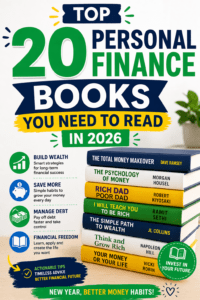
If there is one habit that consistently separates people who build wealth from those who remain financially stuck, it is reading the right personal finance books. The world of money is changing quickly, and what worked even five years ago may not be enough today. In 2026, understanding money goes beyond saving. It includes mindset, investing, income creation, and long term planning. The right books help you think differently, act intentionally, and avoid costly mistakes. They also give you a sense of direction when everything about money feels confusing. This list brings together timeless classics and modern guides that can support you at every stage of your financial journey.
1. The Total Money Makeover – Dave Ramsey
This book is designed for people who want a clear and structured way to take control of their finances. It introduces a step by step system known as the baby steps, which guide readers from saving their first emergency fund to becoming completely debt free. One of the strongest messages in the book is the importance of discipline and consistency. It emphasizes that financial success is less about complex strategies and more about sticking to simple principles. The debt snowball method explained in the book is particularly powerful because it focuses on small wins that build momentum. The tone is direct and practical, making it easy to follow even if you feel overwhelmed. Many readers find it helpful because it removes confusion and replaces it with clarity and action.
2. The Psychology of Money – Morgan Housel
This book takes a completely different approach by focusing on how people think about money rather than just what they do with it. It explains that financial decisions are often driven by emotions, experiences, and personal beliefs rather than logic. Through a collection of short stories, it highlights how patience and long term thinking can lead to better outcomes. It also shows how comparison and ego can quietly destroy financial progress. One of the most important ideas is that doing well with money does not require extreme intelligence but rather consistent behavior. The writing style is simple yet deeply thought provoking. It leaves you reflecting on your own habits and decisions in a way that feels personal and real.
3. Rich Dad Poor Dad – Robert Kiyosaki
This book challenges traditional beliefs about work, income, and financial security. It tells the story of two father figures with very different views on money and success. One key lesson is the difference between assets and liabilities, and how this distinction shapes your financial future. The book encourages readers to think beyond earning a salary and instead focus on building income generating assets. It also stresses the importance of financial education, something that is often missing in formal schooling. The ideas presented are simple but powerful, making them easy to apply in everyday life. Many readers find that it completely shifts how they view money and opportunities.
4. I Will Teach You to Be Rich – Ramit Sethi
This book offers a modern and practical approach to managing money in a way that feels realistic. It focuses on automating your finances so that saving and investing happen without constant effort. One of its key messages is that you can enjoy your money while still being responsible. It encourages conscious spending, where you spend generously on what you love and cut back on what does not matter to you. The book also explains investing in a simple and accessible way, removing much of the fear around it. It provides actionable steps that can be implemented immediately. The tone is conversational, making it feel like guidance from someone who understands real life challenges.
5. The Simple Path to Wealth – JL Collins
This book simplifies investing in a way that makes it less intimidating for beginners. It focuses on the idea that building wealth does not require complicated strategies. Instead, it highlights the power of low cost index funds and long term investing. The author explains financial independence in a way that feels achievable rather than distant. It also addresses common fears about market crashes and economic uncertainty. The writing is straightforward and easy to understand, even if you have no background in finance. Many readers appreciate how it removes unnecessary complexity and focuses on what truly works. It is a strong foundation for anyone who wants to start investing with confidence.
6. Think and Grow Rich – Napoleon Hill
This book focuses on the mental and emotional aspects of building wealth. It emphasizes the importance of belief, persistence, and clarity of purpose. Rather than offering technical advice, it explores the mindset needed for success. It teaches that thoughts can influence outcomes when combined with consistent action. The concept of desire as a starting point for achievement is a central theme throughout the book. While some ideas may feel abstract, they encourage deep reflection on personal goals. Many readers find it motivating because it connects success with inner transformation.
7. Your Money or Your Life – Vicki Robin
This book invites readers to rethink their relationship with money and time. It introduces the idea that money represents life energy, which changes how you view spending. It encourages tracking every expense and evaluating whether it brings true value. The goal is to align your finances with your personal values and long term vision. It also explores the concept of financial independence as a path to freedom rather than just wealth. The tone is reflective and thoughtful, making it feel more like a life guide than a financial manual. Many people find it transformative because it shifts their priorities in a meaningful way.
8. Atomic Habits – James Clear
This book explains how small daily actions can lead to significant long term results. It focuses on building systems rather than relying on motivation. In the context of money, it helps you develop habits like saving regularly and tracking expenses. It also shows how to break negative patterns that may be holding you back. The idea of making habits easy and automatic is particularly useful for financial growth. The book is filled with practical strategies that can be applied immediately. It reinforces the idea that consistency matters more than perfection.
9. The Millionaire Next Door – Thomas J. Stanley & William D. Danko
This book is based on research into the habits of wealthy individuals. It reveals that many millionaires live modest lifestyles and prioritize saving and investing. One key lesson is that wealth is often hidden rather than displayed. It challenges the idea that high income automatically leads to wealth. Instead, it shows that discipline and smart choices play a bigger role. The book also explores the importance of financial independence and self reliance. Its insights are both surprising and eye opening for many readers.
10. You Are a Badass at Making Money – Jen Sincero
This book combines personal development with financial growth. It focuses on identifying and removing limiting beliefs about money. It encourages readers to think bigger and aim for higher income levels. The tone is energetic and motivational, which makes it engaging to read. It also emphasizes taking action rather than waiting for the perfect moment. While it leans more toward mindset, it still offers practical insights. Many readers find it helpful for building confidence and changing their relationship with money.
11. The Barefoot Investor – Scott Pape
This book provides a simple and structured approach to managing money. It breaks down financial tasks into easy steps that anyone can follow. The focus is on creating a system that covers saving, spending, and investing. It also emphasizes building an emergency fund and reducing debt. The tone is friendly and easy to understand, making it suitable for beginners. It removes the feeling of overwhelm by simplifying complex ideas. Many readers appreciate its practical and relatable advice.
12. Get Good with Money – Tiffany Aliche
This book offers a comprehensive approach to financial wellness. It covers everything from budgeting and saving to insurance and credit management. The goal is to build a strong and stable financial foundation. It also emphasizes financial education as a key tool for empowerment. The advice is practical and grounded in real life experiences. It encourages readers to take control of their financial future step by step. The overall message is about creating security and confidence with money.
13. Money: Master the Game – Tony Robbins
This book explores advanced strategies for building wealth and achieving financial freedom. It includes insights from some of the most successful investors in the world. The focus is on long term planning and smart decision making. It also explains how to protect your investments and manage risks. While it is more detailed than some other books, it still provides valuable lessons. It encourages readers to take a proactive approach to their finances. Many find it inspiring because it combines knowledge with motivation.
14. The Intelligent Investor – Benjamin Graham
This book is considered a classic in the world of investing. It introduces the concept of value investing, which focuses on buying undervalued assets. It also emphasizes the importance of patience and long term thinking. The book teaches readers how to manage risk and avoid emotional decisions. While it can be more technical, its principles are timeless. It encourages a disciplined and thoughtful approach to investing. Many serious investors consider it essential reading.
15. Broke Millennial – Erin Lowry
This book addresses the financial challenges faced by young adults. It covers topics like budgeting, debt, and building credit. The tone is relatable and easy to understand. It provides practical advice for navigating real life financial situations. It also emphasizes the importance of financial independence. The book feels approachable and realistic rather than overwhelming. Many readers find it helpful as a starting point for managing money.
16. Financial Freedom – Grant Sabatier
This book focuses on achieving financial independence in a shorter time frame. It encourages increasing income through side hustles and smart career moves. It also emphasizes saving aggressively and investing wisely. The goal is to create options and freedom in your life. The book provides both motivation and practical steps. It challenges traditional timelines for retirement and wealth building. Many readers find it empowering because it expands what feels possible.
17. The Automatic Millionaire – David Bach
This book highlights the importance of automation in building wealth. It shows how setting up automatic savings and investments can simplify financial management. The idea is to remove the need for constant decision making. It also emphasizes consistency over time. The book explains how small actions can lead to significant results. It is simple but very effective in its approach. Many readers find it helpful because it makes wealth building feel manageable.
18. Wealth Habits – Thomas C. Corley
This book explores the daily habits that contribute to financial success. It focuses on routines and behaviors rather than quick wins. It shows how consistent actions can lead to long term results. The book also emphasizes personal development alongside financial growth. It provides insight into how wealthy individuals think and act. The lessons are practical and easy to apply. Many readers find it useful for building discipline and focus.
19. The 4 Hour Workweek – Timothy Ferriss
This book challenges traditional ideas about work and income. It introduces the concept of designing your lifestyle rather than following a fixed path. It explores ways to create income streams that require less time. The focus is on freedom and flexibility. It also encourages thinking creatively about opportunities. The book is both inspiring and unconventional. Many readers find it eye opening because it expands their perspective.
20. Quit Like a Millionaire – Kristy Shen & Bryce Leung
This book provides a practical guide to achieving financial independence. It explains how to build wealth through investing and smart financial choices. It also addresses risk management and long term planning. The authors share their own journey, which makes the advice relatable. The book simplifies complex financial concepts. It encourages readers to take control of their financial future. Many find it motivating because it shows that financial independence is achievable.
Reading these personal finance books can completely shift how you approach money, decisions, and your future. Each book offers a different perspective, and together they create a well rounded understanding of financial growth. You may find that one book changes your mindset while another changes your strategy. The most important thing is to apply what you learn in small consistent steps. Over time, those steps build momentum and confidence. As you continue learning and adjusting, your financial life begins to reflect those changes in a real and lasting way.


